
Last updated October 17, 2026
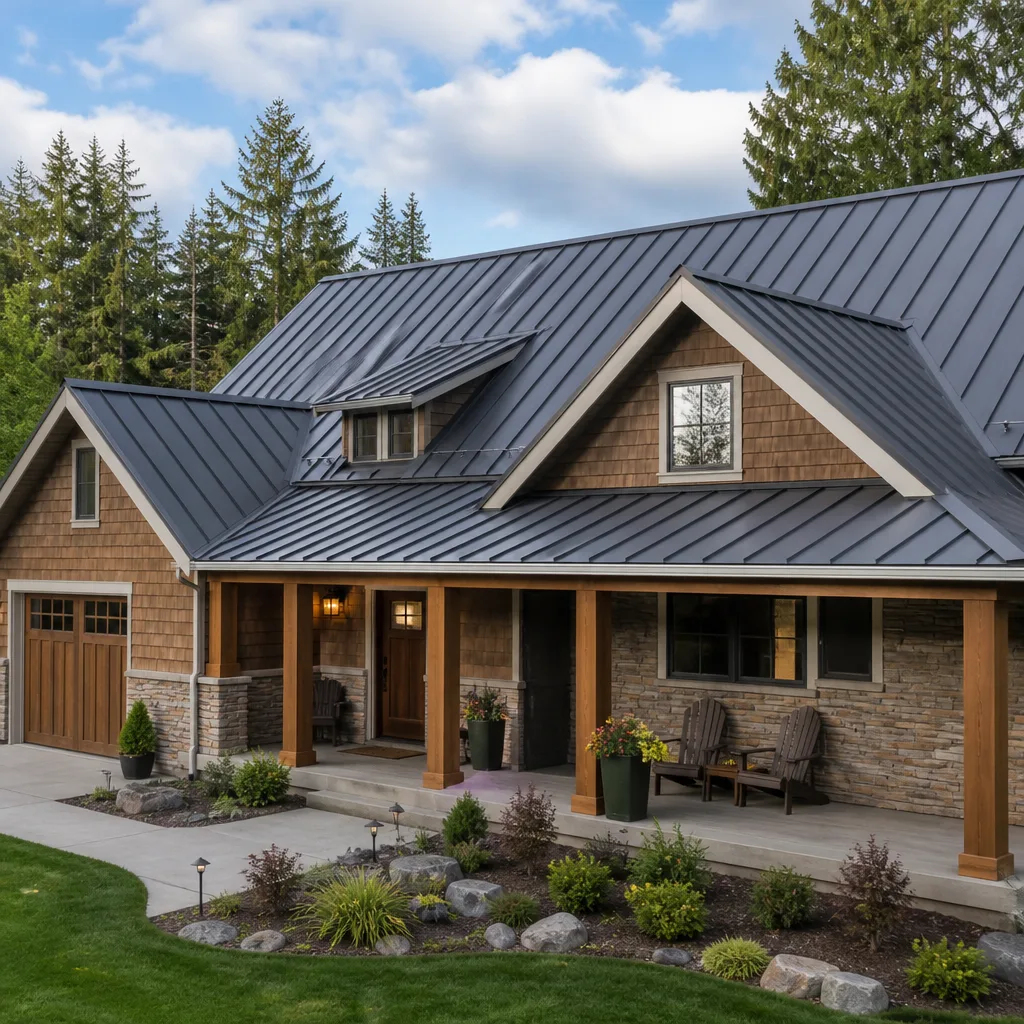 Metal roofing
 Architectural shingles
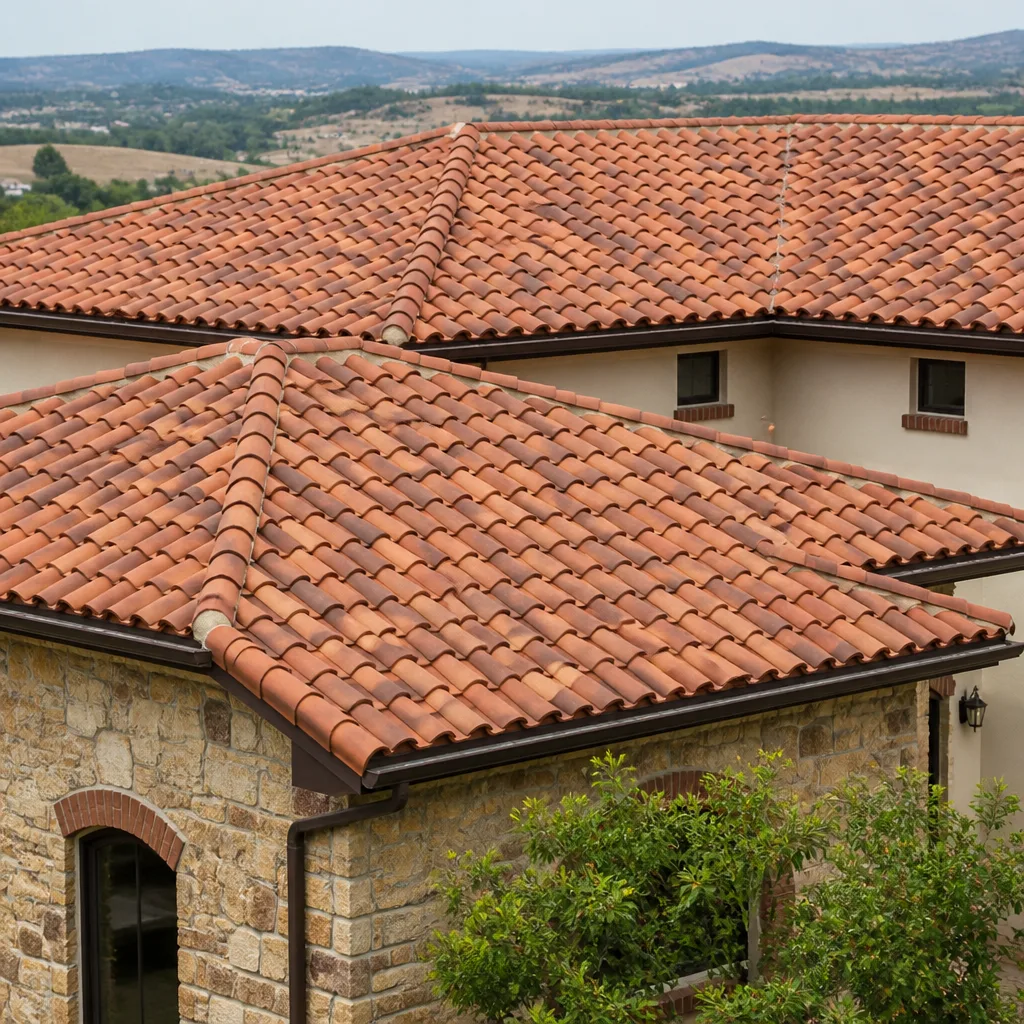 Tile roofing
 Owens Corning
Free roof inspection with deck photos before we talk money - GAF and Owens Corning certified installation
DIY vs Professional Roofing: The San Diego Homeowner’s Decision Guide
Here’s a counterintuitive fact about roofing in San Diego: the most common cause of a concrete tile roof failure isn’t age, weather, or cheap materials. It’s a homeowner walking on it. Concrete tile, the dominant roofing material across San Diego’s Mission Valley, Rancho Bernardo, and La Jolla neighborhoods, is uniquely brittle. A 180-pound person stepping on the unsupported edge of a tile can crack it invisibly from beneath, creating a hairline fracture that won’t show water intrusion for 12 to 18 months. By then, the decking underneath has begun to rot, and the manufacturer warranty is void because the damage came from unlicensed foot traffic, not a material defect. This guide will walk you through which roof repairs are genuinely safe to do yourself, which ones carry legal and financial risk, and how to think about the cost comparison honestly. It’s written for San Diego homeowners specifically, because this city’s roofing stock behaves differently than anywhere else in the country.
Styles & brands we work with
Quick Answer
Most roofing work in San Diego should be done by a licensed professional, but a small set of simple maintenance tasks are safe for a careful DIYer-our Roof Repair Maintenance Checklist for San Diego Homeowners covers what to watch for. Replacing a single cracked tile, re-caulking a pipe boot, and clearing a scupper drain are legitimate weekend jobs. Anything involving a repair over $500 in labor and materials, any work requiring a permit, and any task that involves walking across the roof surface itself crosses a legal and safety line that makes professional help the smarter call.
Table of Contents
- What You Can Legally Do Yourself
- What California Law Says About Unlicensed Roofing
- Why Concrete Tile Punishes Amateurs
- The Real Cost Comparison: Money, Time, and Warranty Risk
- San Diego Permit Requirements You Should Know
- The Three-Question Decision Tree
- Tools and Skills: An Honest Assessment
- Common Mistakes to Avoid
- When to Call a Professional
- Frequently Asked Questions
- The Bottom Line
What You Can Legally Do Yourself
Let’s start with the honest truth: there are a handful of roof maintenance tasks that a careful San Diego homeowner can handle without violating state law or voiding a warranty. These are all accessible from a ladder or the roof’s edge, require no permit, and involve no structural work.
The key distinction is this: if your feet stay on solid ground or a ladder, and you’re not altering the roof system, you’re in DIY territory. If you’re stepping onto the tile surface or touching anything structural, you’re not.
Here’s what falls into the genuinely safe category:
- Replacing a single cracked tile at the roof’s edge. If the tile is within arm’s reach from a ladder and you can lift it straight up without stepping on adjacent tiles, this is doable. You’ll need a tile lifter, a replacement tile that matches the profile (flat, S-curve, or mission-style), and about 30 minutes of patience. The total cost is typically $8 to $25 for the tile itself.
- Clearing a scupper drain or gutter. Scupper drains, the box-shaped openings common on San Diego’s flat-roof and Spanish-style homes, clog with leaves and debris during Santa Ana wind events in the fall. Clearing one from a ladder takes 15 minutes and a pair of gloves. Neglecting it causes ponding water, which is a leading cause of flat-roof leaks in coastal neighborhoods like Point Loma and Pacific Beach.
- Re-caulking a pipe boot or vent flashing. The rubber boot around a plumbing vent pipe degrades under San Diego’s intense UV exposure. If the boot is cracked but the flashing itself is intact, you can apply a lap-sealant caulk (like a butyl or silicone option, $12 to $20 at any San Diego hardware store) around the base. This is a temporary fix that can buy you a year or two. It is not a permanent repair if the flashing is corroded.
- Inspecting visible flashing from the ground with binoculars. You can absolutely check the condition of chimney flashing, vent collars, and drip edges from the ground with a decent pair of binoculars. This doesn’t fix anything, but it helps you know when to make the call.
Anything beyond these four tasks involves stepping onto the roof’s walking surface, and that changes everything. In our experience, the homeowners who call us after a DIY attempt gone wrong almost always started with a task that seemed “just as simple as the tile one” but required standing on the roof itself.
What California Law Says About Unlicensed Roofing
California’s contractor licensing law, Business and Professions Code Section 7028, makes it illegal for an unlicensed person to perform roofing work when the total cost of labor and materials exceeds $500. This isn’t a guideline. It’s a misdemeanor on the first offense, with fines up to $5,000 and potential jail time of up to six months for repeat violations.
Here’s what that means for a San Diego homeowner considering a DIY roof repair:
If the repair involves more than $500 in combined labor and materials, which is essentially any repair beyond replacing a single tile or re-caulking a small section, you are legally required to hire a licensed contractor. Doing it yourself in that scenario isn’t a gray area. It’s a violation of state law.
The practical consequence goes beyond the legal exposure. When you sell your home in San Diego, a home inspector will examine the roof. If they find evidence of unpermitted or unlicensed work, which is often visible in the form of mismatched tiles, improper fastening patterns, or non-standard flashing details, the buyer can demand a full professional roof replacement as a condition of sale. You’ll pay for the work eventually, and you’ll pay more because it’s now a contingency item in a real estate transaction, not a planned home improvement.
There’s also the liability angle. If you perform an unlicensed repair, and that repair later fails and causes water damage to your own home, your homeowner’s insurance may deny the claim. Insurance companies in California have become increasingly strict about excluding damage that traces back to unpermitted or unlicensed work. You don’t just eat the cost of the failed repair. You eat the cost of the interior damage, the mold remediation, and the re-roof.
Why Concrete Tile Punishes Amateurs
Most DIY roofing advice online is written for asphalt shingle roofs because that’s what dominates the national market. But San Diego is a concrete tile city. Walk through Clairemont, Tierrasanta, or Carlsbad, and you’ll see concrete tile on the majority of homes built after 1960. The material behaves completely differently than asphalt shingles, and it punishes amateur handling in ways that aren’t obvious until it’s too late.
Here’s the core problem: concrete tile is brittle under point loads. An asphalt shingle flexes when you step on it. A concrete tile does not. It cracks. And the crack usually doesn’t happen on the top surface where you can see it. The tile fails from the underside, where the unsupported span between battens creates a bending moment. You step on the tile’s edge, it flexes a fraction of a millimeter, and a hairline crack forms on the underside. The top looks completely fine.
That crack now becomes a water pathway. San Diego’s winter rains, while brief, are intense when they arrive. A hairline crack that lets in a tablespoon of water per storm doesn’t sound like much, but over a single rainy season, that’s enough moisture to start delaminating the underlayment and rotting the plywood decking. By the time you see a water stain on your ceiling, 12 to 18 months later, the damage has spread far beyond the original crack.
There’s also the weight distribution problem. Concrete tile roofs are engineered as a system. The tiles transfer load down through the battens to the rafters in a specific pattern. When you walk on the tiles incorrectly, you’re not just risking the tile you step on. You’re creating stress concentrations on the tiles around it. A common DIY damage pattern we’ve seen in San Diego’s East County neighborhoods is a cluster of 6 to 10 broken tiles radiating outward from a single footpath the homeowner used repeatedly, thinking it was “safe” because nothing broke the first time.
Compare that to asphalt shingle roofs in places like Phoenix or Las Vegas, where DIYers can walk relatively freely on a low-pitch roof surface. Shingles flex, absorb the load, and spring back. Concrete tile doesn’t flex. It’s why professional roofers in San Diego use foam walking pads, roof ladders, and specific foot placement patterns that distribute weight across the tile’s strongest point. Those techniques aren’t intuitive and they aren’t learnable from a YouTube video.
The Real Cost Comparison: Money, Time, and Warranty Risk
The DIY-versus-professional debate usually gets framed as a simple math problem: contractor labor rates versus your free labor. That framing is wrong. Here’s the actual cost comparison for a San Diego homeowner, using real numbers from our market. For deeper numbers, see our Roofing Cost Breakdown: The San Diego Homeowner’s Reference for 2026.
Scenario: Replacing 8 broken tiles on a two-story home in Rancho Peñasquitos.
- Professional cost: $350 to $600. Includes the tiles (typically $8 to $25 each, matched to your existing profile), the roof access equipment, the labor, and a written guarantee on the repair.
- DIY cost (materials only): $64 to $200 for the tiles. But you’ll need to rent or buy a roof ladder ($150 to $400), which is non-negotiable for safety on a two-story home. You’ll spend 4 to 6 hours if nothing goes wrong. You’ll void any remaining manufacturer warranty on the roof because the installation was unlicensed. You’ll carry the full liability if the repair fails and causes interior damage.
- Cost of correcting a DIY mistake: $800 to $2,500. This is the number most people ignore. If you crack additional tiles while walking to the damaged ones, if you install the replacement tiles incorrectly and they blow off in the next Santa Ana event, or if you miss an underlying decking problem and the “simple tile replacement” turns into a structural repair, the professional repair cost goes up. By a lot.
The honest math for most repairs is this: the DIY savings disappear the moment something goes wrong, and the probability of something going wrong on a concrete tile roof is high for anyone who isn’t trained. The 20% of cases where DIY saves money are the single-tile, edge-accessible repairs we described earlier. The other 80% cost more as DIY when you account for risk, not less.
There’s also the warranty dimension. Roofing material manufacturers like GAF, CertainTeed, and Boral issue warranties that are contingent on installation by licensed professionals. If you have a 50-year tile warranty and you replace 8 tiles yourself, you haven’t technically voided the entire warranty, but you’ve given the manufacturer an easy reason to deny a future claim. They’ll point to the unlicensed work and argue it compromised the roof system. You’ll be fighting a warranty dispute instead of getting a new roof.
San Diego Permit Requirements You Should Know
San Diego’s building permit requirements are another factor that almost never appears in generic DIY roofing content. Here’s what a homeowner needs to know.
The City of San Diego requires a permit for any roof work that involves structural changes, decking replacement over a certain square footage, or a full roof replacement. A simple repair like replacing a few tiles or re-flashing a vent does not require a permit. But the line between “repair” and “replacement” is drawn by the city’s building department, not by the homeowner.
If you’re replacing more than about 40% of your roof’s surface area, the city considers it a re-roof, and a re-roof in San Diego requires a permit and an inspection. The permit itself costs between $150 and $400 depending on the project valuation. The inspection verifies that the new underlayment meets current code, which in San Diego’s fire-prone zones means a Class A fire-rated assembly under California Building Code Chapter 7A.
This matters for the DIY question in two ways. First, if you need a permit, you cannot legally pull it yourself for roofing work. California requires the contractor of record to be licensed. Second, unpermitted re-roofing work becomes a title defect when you sell. San Diego County home sales routinely include a permit history review, and unpermitted roofing work is one of the most common deal-killers in the region’s real estate market.
For more detail on what full roof replacement involves in this market, see our guide to Roof Installation in San Diego.
The Three-Question Decision Tree
Before you start any roof project in San Diego, answer these three questions honestly. They’ll tell you whether to proceed or pick up the phone.
- Can you complete the task without stepping off a ladder onto the roof surface? If the answer is no, meaning you need to walk on the tiles, shingles, or membrane to reach the work area, stop. The risk of invisible damage to a tile roof, or of a slip on a steep-pitch shingle roof, exceeds any cost savings. This single question eliminates most DIY roofing projects from consideration.
- Will the total cost of materials, including any tools you need to rent or buy, exceed $500? If yes, the work is legally above the unlicensed threshold under California law. Even if you’re confident in your skills, you’re now in a situation where any failure carries legal exposure along with the practical cost. This is the threshold where professional help becomes mandatory, not optional.
- Does the repair involve anything below the roof surface, meaning decking, underlayment, flashing, or structural framing? If you can see daylight through the roof, if the decking feels spongy, if the flashing is corroded rather than just dirty, the repair is beyond the cosmetic surface level. These failures compromise the waterproofing and structural integrity of the entire roof system. A licensed roofer is the only appropriate call.
Three yes answers mean you’re in safe DIY territory. One no answer, on any of the three, means you should make a call. It’s that straightforward. For homeowners who want to know exactly what a professional repair involves and what it should cost, see our Roof Repair in San Diego page.
Tools and Skills: An Honest Assessment
Most DIY failures happen because the homeowner underestimates the tool and skill requirements. Here’s a straightforward look at what even the “simple” tasks actually demand.
For a single tile replacement at the roof’s edge, you’ll need a tile lifter, which is a specialized flat bar that fits under the tile and lifts it off the batten without breaking the adjacent tiles. You’ll need a replacement tile that matches not just the color but the profile. Concrete tiles come in flat, low-profile, high-profile, S-curve, and mission-style profiles, and they’re not interchangeable. You’ll need to know whether your tile is nailed or wire-tied, which affects how you remove it and how you secure the replacement. You’ll need a ladder tall enough to reach the work area safely, which for a two-story San Diego home means a 28- to 32-foot extension ladder, not the 20-foot ladder in most garages.
For re-caulking a pipe boot, you’ll need to identify whether the flashing is actually recoverable. A cracked rubber boot that’s still pliable can be caulked. A boot that’s dry-rotted, crumbling, or separated from the metal flashing cannot. Caulking over a failed boot just traps water behind the sealant and accelerates the corrosion beneath.
The skill component is harder to quantify, but it’s the more important variable. A professional roofer in San Diego has walked thousands of tile roofs and developed a feel for what “safe” foot placement looks like. They know that mission-style tiles have a specific load-bearing rib, that the tile’s overlap point is the only safe step location, and that the roof’s pitch changes the calculus entirely. None of this transfers through a video tutorial. It’s embodied knowledge, and the cost of developing it yourself is measured in broken tiles and leak repairs.
If you’ve read this far and are still uncertain about your specific situation, the most efficient next step is a professional assessment. Any reputable Roofing Company in San Diego will provide a written evaluation of the work needed and what it should cost.
Common Mistakes to Avoid
- Walking on the tile roof to inspect for damage. This is the single most common DIY error we see in San Diego, and it’s the one that creates the most expensive downstream problems. The inspection itself causes the damage it was meant to find.
- Using the wrong replacement tile profile. A flat tile does not interlock with an S-curve tile. If the profile isn’t matched exactly, the replacement tile won’t seat properly, will allow water under the overlap, and will eventually blow off in high wind. San Diego’s East County, particularly Santee and Lakeside, sees 50-plus mph gusts during Santa Ana events that will expose this mistake quickly.
- Caulking over corroded flashing instead of replacing it. Sealant is a temporary measure for intact materials, not a repair for deteriorated metal. If the flashing is rusted through at the nail holes, caulking it just hides the failure point while the leak continues underneath.
- Replacing tiles without checking the underlayment beneath them. A broken tile often means water has already reached the underlayment. If you replace the tile without inspecting and repairing the underlayment, you’re sealing moisture into the roof system. That’s how a $20 tile replacement becomes a $4,000 decking repair two years later.
- Ignoring the permit requirement for larger repairs. In San Diego, the rule is simple: if the work needs a permit, you can’t do it yourself legally. We covered this above, but it bears repeating because the consequences hit hardest at resale, when the work is already done and the permit was never pulled.
- Assuming a YouTube video covers San Diego-specific conditions. Most tutorial videos feature asphalt shingle roofs on low-pitch, single-story homes in climates without San Diego’s specific combination of UV intensity, Santa Ana winds, and coastal salt exposure. The techniques don’t transfer.
- Underestimating the two-story ladder safety requirement. San Diego’s housing stock includes a high percentage of two-story homes, especially in developments built after 1980. Working from a ladder that’s too short, or setting a ladder on uneven ground, is how serious roof-related injuries happen. The risk is never worth the savings.
When to Call a Professional
Call a professional for any of these situations: a repair that requires walking on the roof surface, any project over $500 in labor and materials, any work requiring a permit, any sign of decking or underlayment damage, any repair involving flashing replacement rather than simple caulking, and any time you’re not certain exactly what’s wrong. Our How to Hire a Roofing Contractor in San Diego: A Step-by-Step Guide walks you through vetting the right pro. The pattern here is consistent: DIY is safest when the task is small, accessible from a ladder, and cosmetic. Everything else belongs with a licensed contractor. Mercer Roofing Co San Diego offers free estimates for San Diego homeowners. Call (619) 810-5520 to schedule one, and a real person will answer.
Frequently Asked Questions
Minor roof repairs in San Diego typically range from $250 to $800, while moderate repairs involving flashing replacement or multiple tile replacements run $800 to $2,500. Major repairs that include decking replacement or underlayment work start around $2,500 and can exceed $6,000 depending on the roof’s size and pitch. These are San Diego market rates, where the concrete tile stock and two-story home mix push costs higher than the asphalt-shingle-dominated national averages. Call (619) 810-5520 for an exact written quote on your specific repair, estimates are free.
Yes, you can replace a single cracked tile yourself if it’s accessible from a ladder and the total material cost stays under $500, but you should not attempt tile replacement that requires walking on the roof surface. The risk of cracking additional tiles or causing invisible underside fractures outweighs the savings, and any damage you cause becomes a warranty voidance issue for the entire roof system.
Minor repairs like replacing a few tiles, re-caulking a pipe boot, or clearing a scupper drain do not require a permit in the City of San Diego. A full roof replacement or any repair involving structural decking work does require a permit, and that permit must be pulled by a licensed roofing contractor. Call Mercer Roofing Co San Diego at (619) 810-5520 if you’re unsure which category your project falls into.
It’s legal to perform minor roofing work yourself if the total labor and materials cost stays under $500, but anything above that threshold done by an unlicensed person violates California Business and Professions Code Section 7028. The violation carries fines, potential misdemeanor charges, and can create title problems when you sell your home.
A properly installed concrete tile roof in San Diego typically lasts 40 to 60 years for the tiles themselves, but the underlayment beneath the tiles wears out in 20 to 30 years and must be replaced. The salt air in coastal neighborhoods like Ocean Beach and Imperial Beach can accelerate underlayment deterioration by 15 to 20 percent compared to inland areas like Poway or Scripps Ranch.
Concrete tile is brittle under point loads, meaning it cracks rather than flexes when stepped on, and the cracks often form on the underside where they can’t be seen. Asphalt shingles bend underfoot and spring back, making them more forgiving of amateur foot traffic. This is why DIY roofing advice that works for an asphalt shingle home in another state fails badly on a concrete tile roof in San Diego. Call (619) 810-5520 for a professional assessment before attempting any tile work yourself.
The Bottom Line
The DIY versus professional roofing decision in San Diego comes down to three questions: can you stay off the roof surface, is the work under $500, and is there any damage below the cosmetic surface level. Three yes answers mean a careful weekend project is reasonable. Any no answer means the smart money goes to a licensed contractor. San Diego’s concrete tile roofs punish amateur foot traffic in ways that asphalt shingle roofs in other cities never will, and California’s contractor licensing law draws a hard line at $500 regardless of your skill level. The homeowner who understands these specific San Diego conditions, not the generic national advice, is the one who makes the right call. Explore more guides & resources to keep your roof in top shape.
For a professional evaluation of any roof concern, see the Mercer Roofing Co San Diego home page or call (619) 810-5520 directly. A real person answers, 24/7.
Written by Grant Whitlock, Owner at Mercer Roofing Co San Diego, serving San Diego since 2000.
See the difference
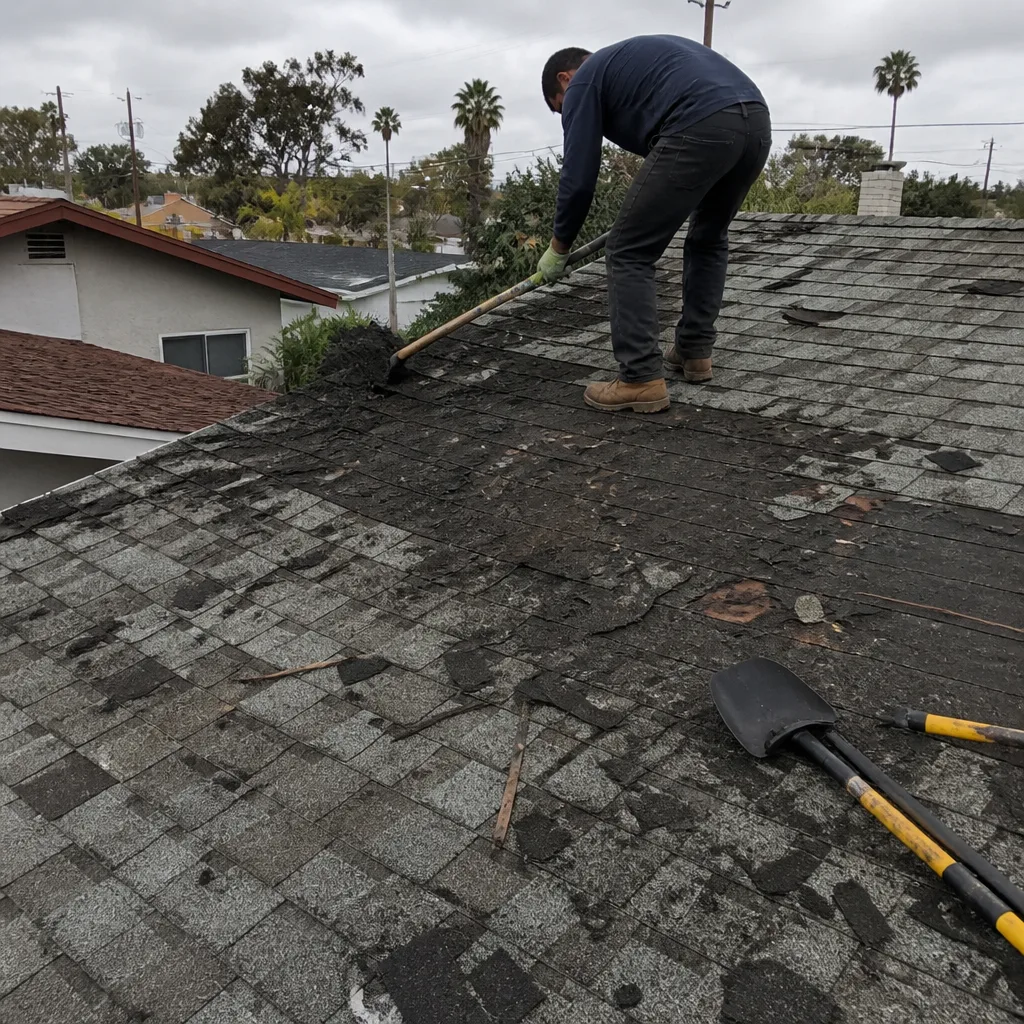 Before
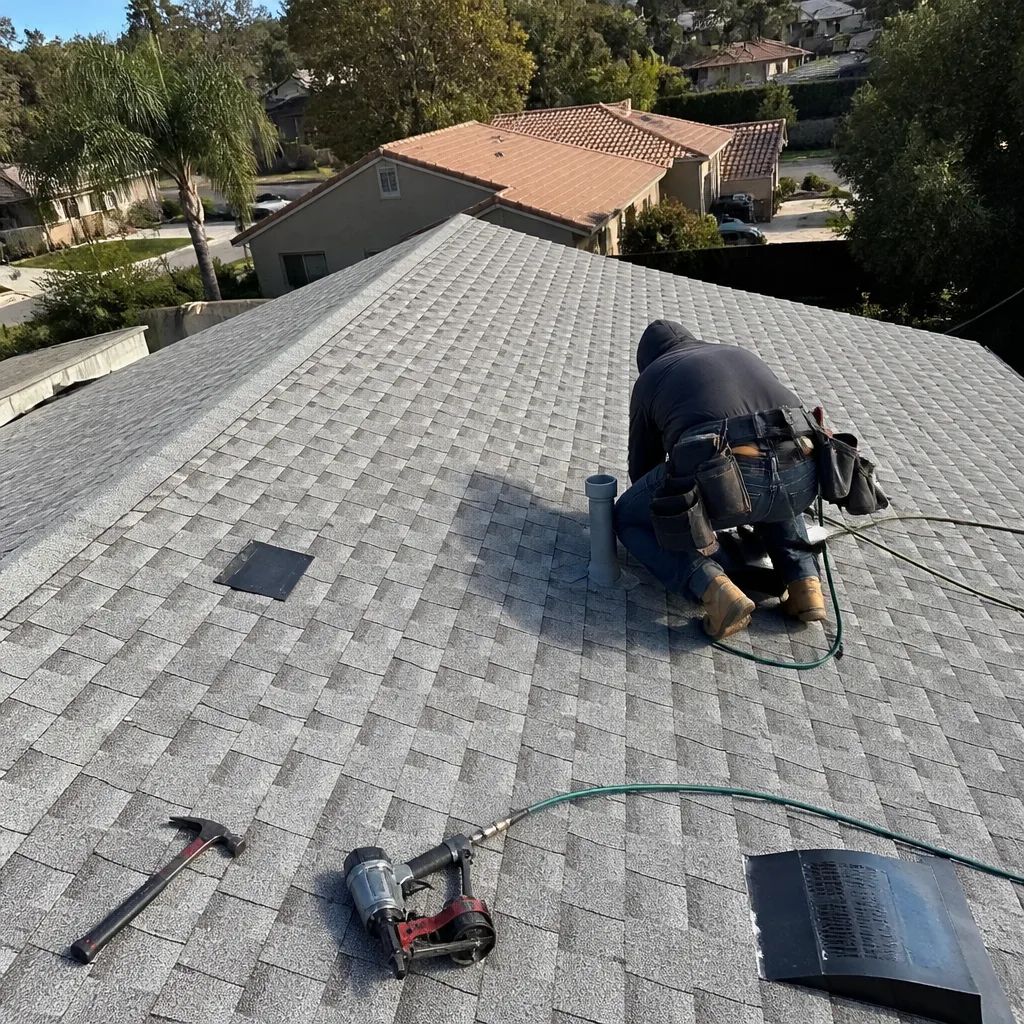 After
After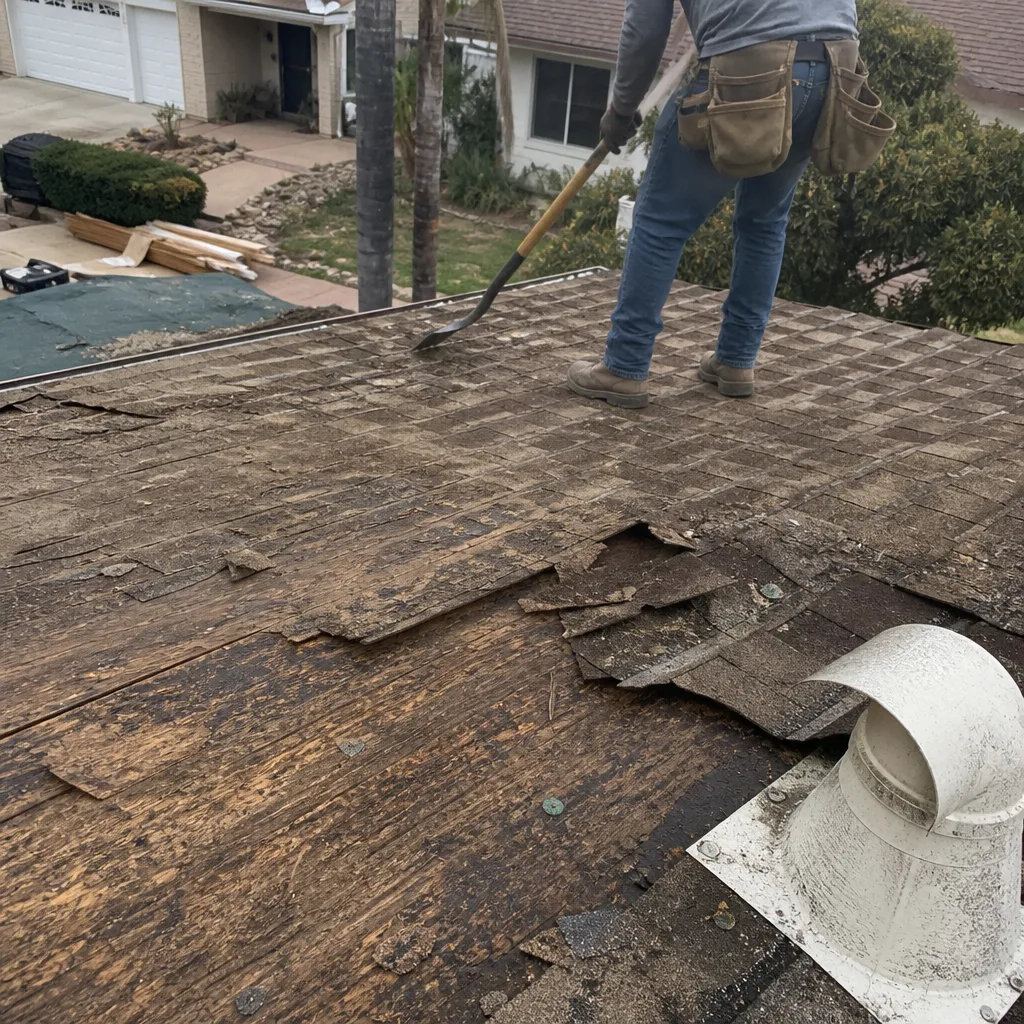 Before
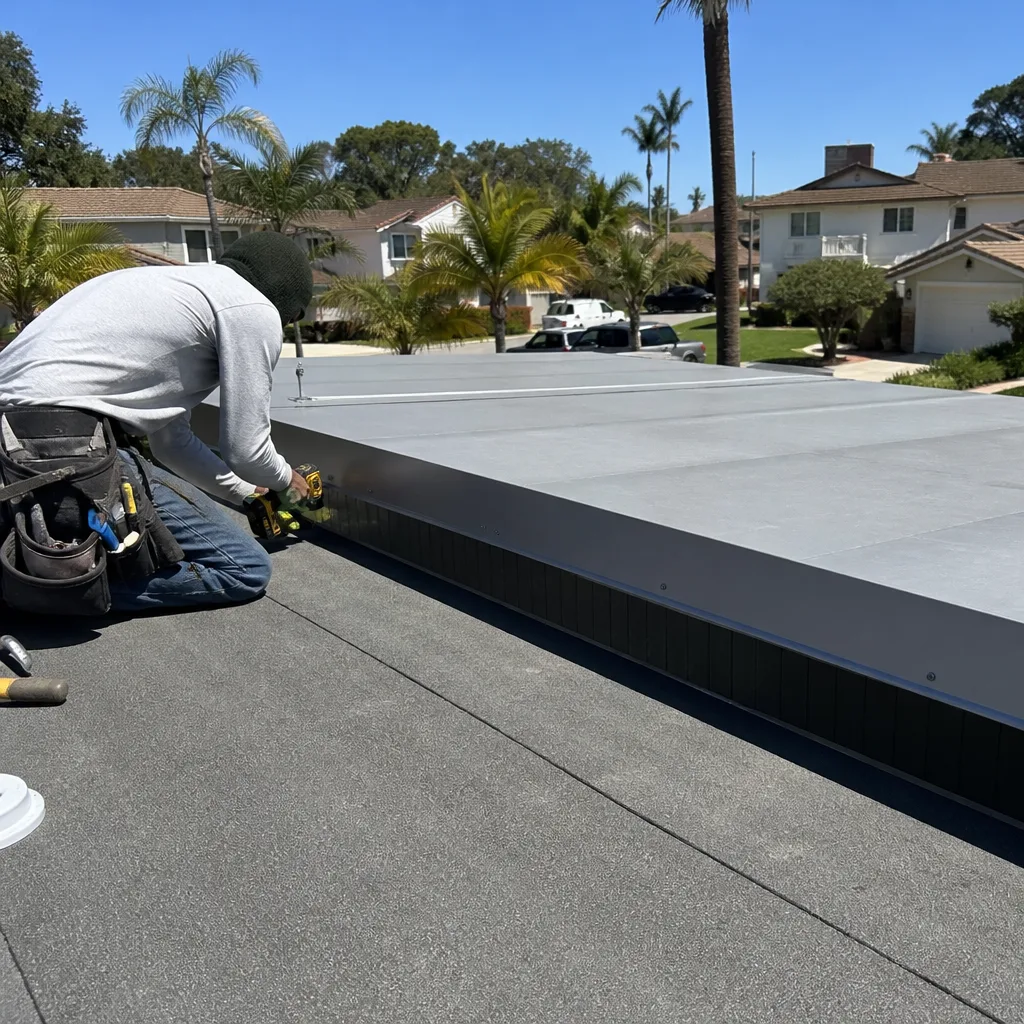 After
After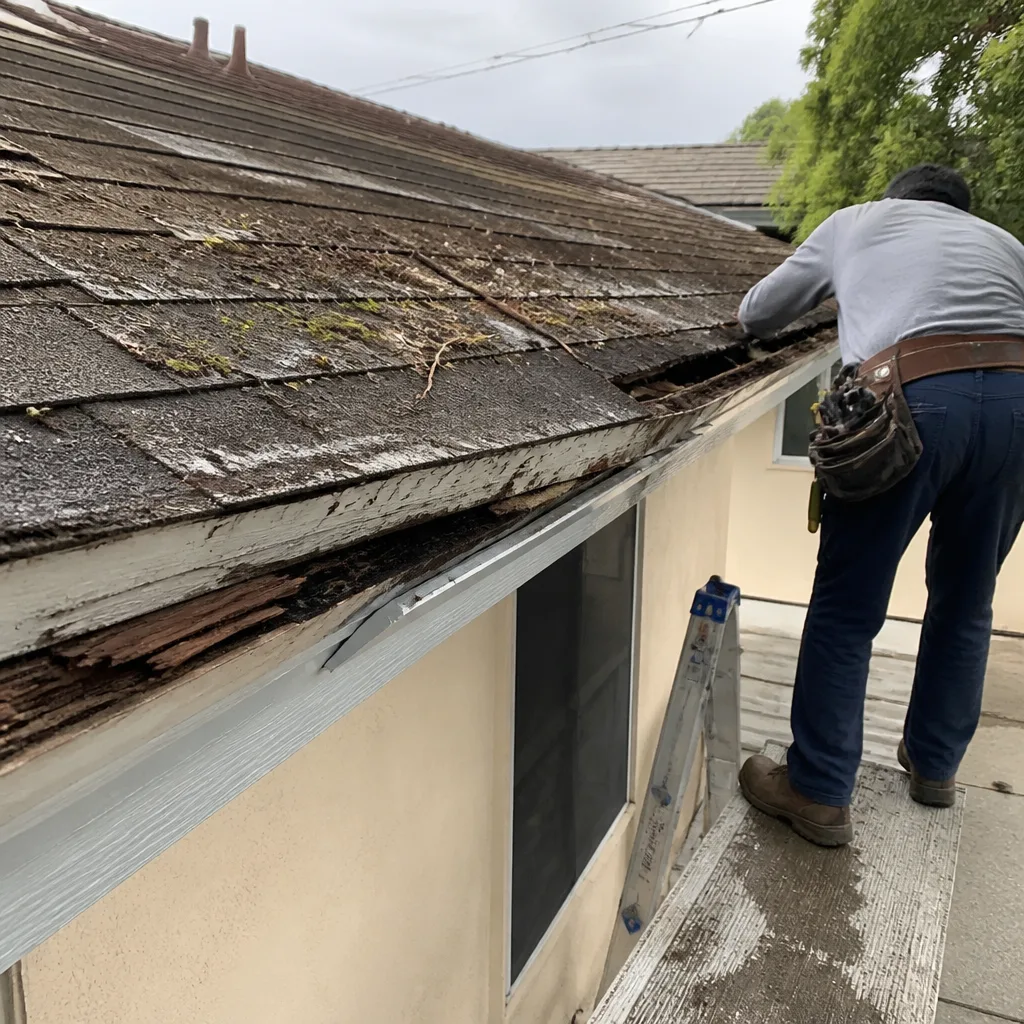 Before
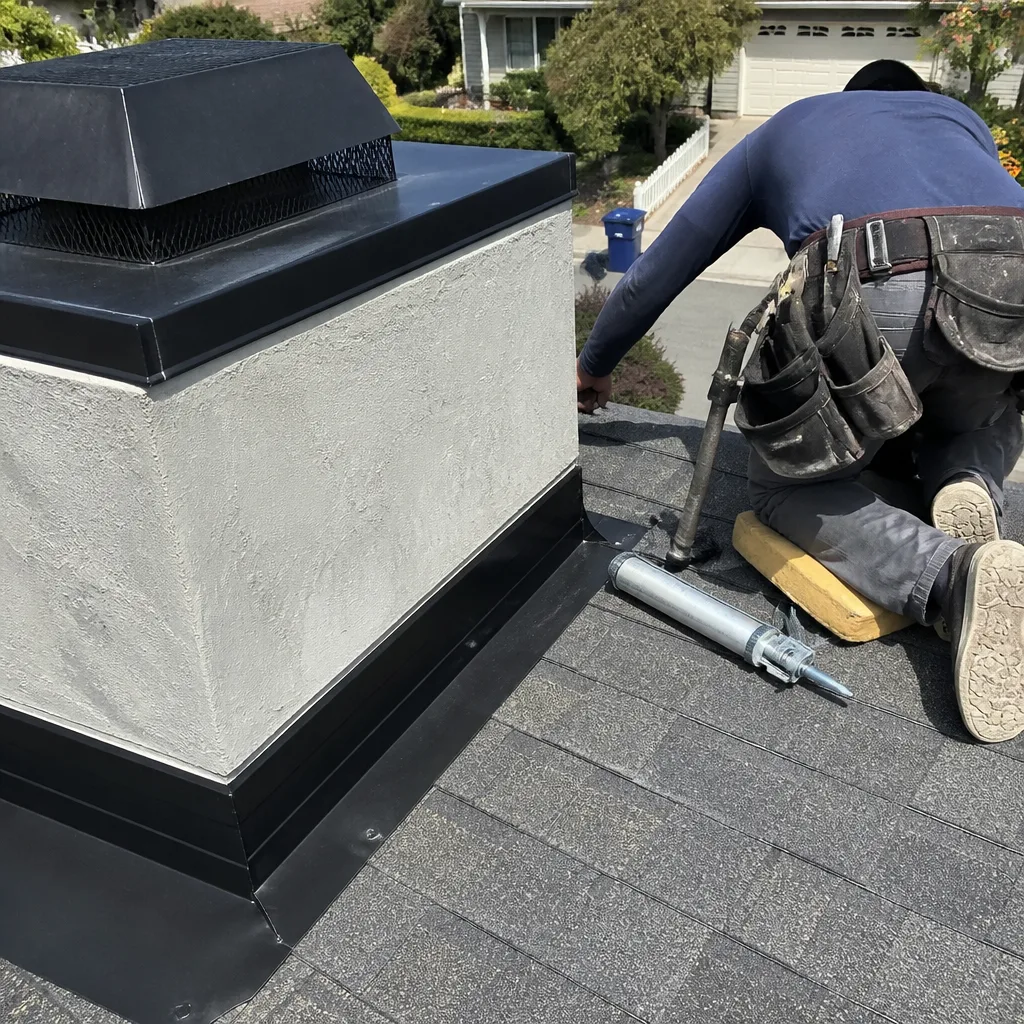 After
After