
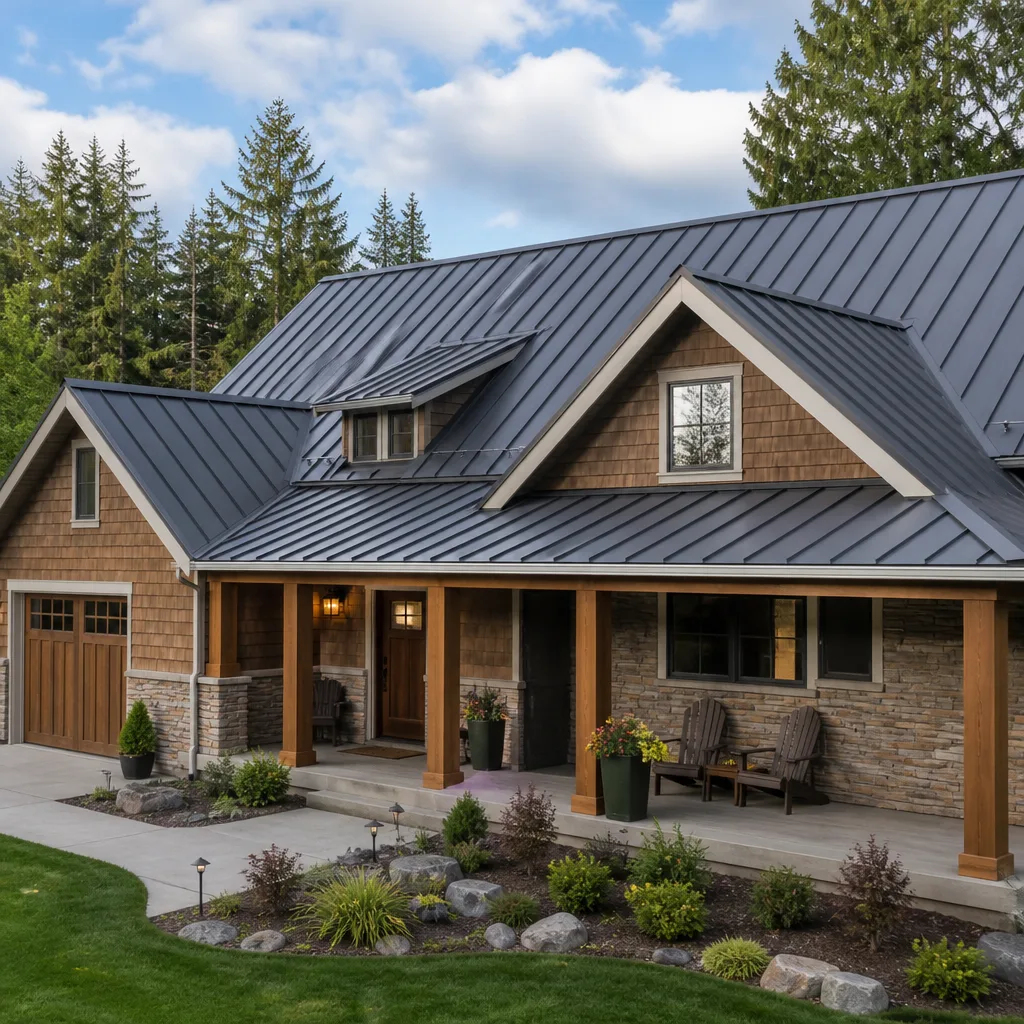
 Metal roofing
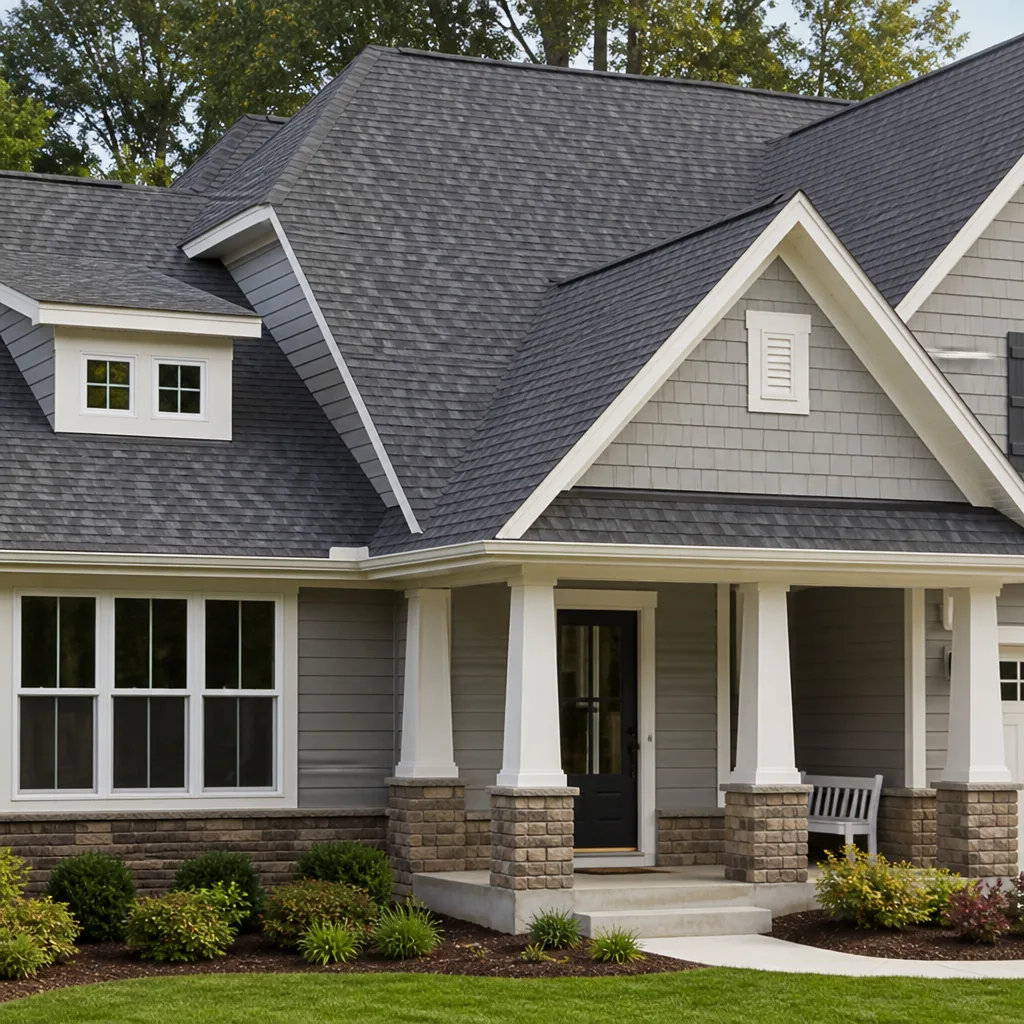 Architectural shingles
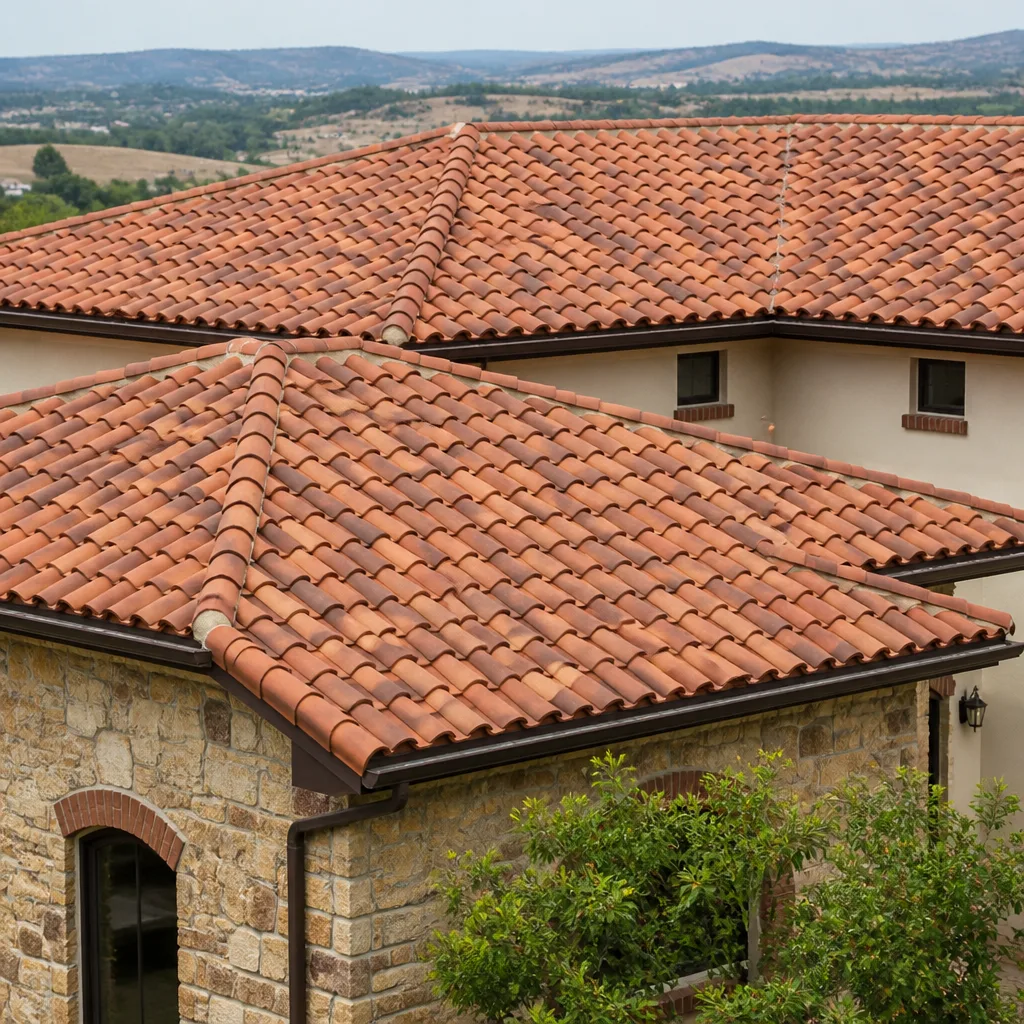 Tile roofing
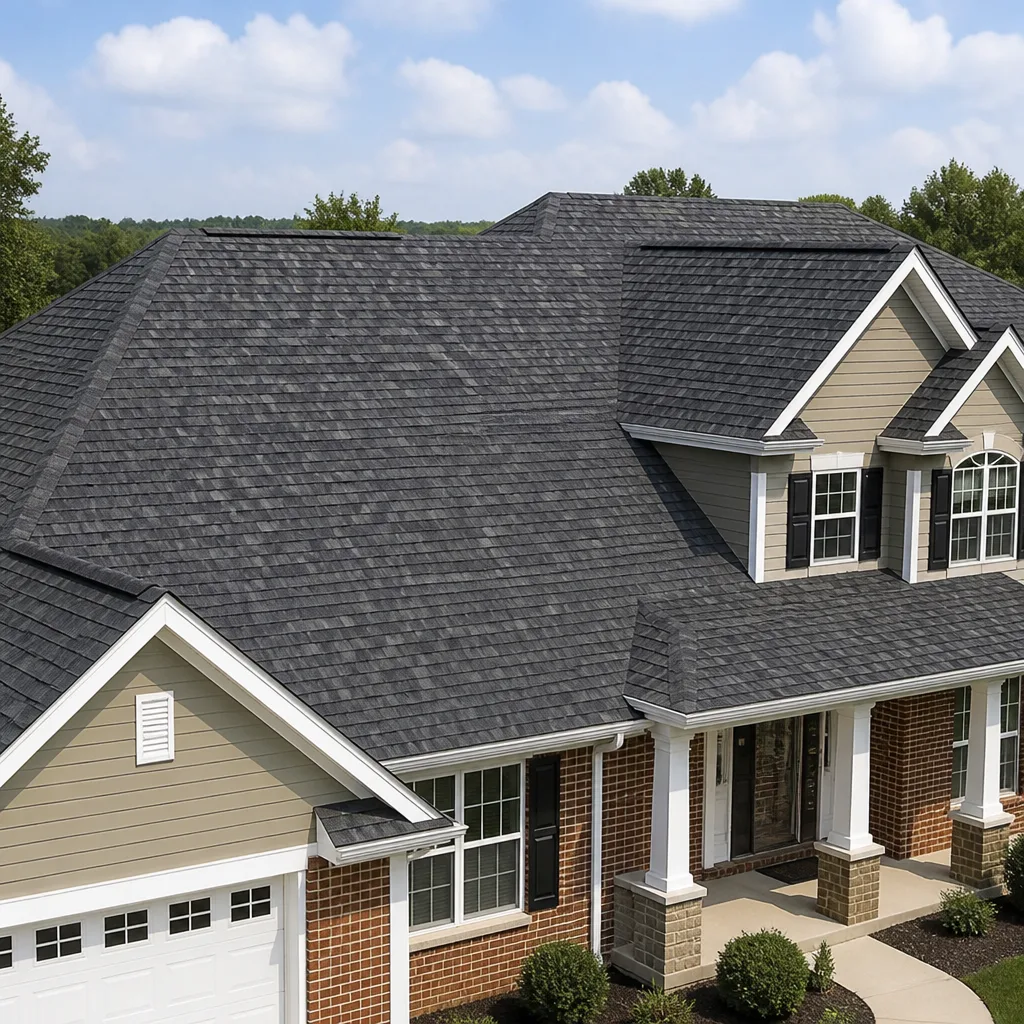 Owens Corning
Free roof inspection with deck photos before we talk money - GAF and Owens Corning certified installation
Atlas Flashing Replacement: The San Diego Owner’s Guide
Atlas flashing replacement in San Diego typically runs $225 to $575 installed, depending on the flashing location, accessibility, and whether surrounding shingles need to be lifted or replaced. We stock Atlas-compatible flashing on our trucks and can usually complete the swap the same day we assess it. Most homeowners discover the problem the way you probably did: a water stain on the ceiling after a Santa Ana wind event, a curl of metal visible from the driveway, or granules collecting in the gutter below a wall intersection.
Flashing is the metal barrier that keeps water from sneaking in where your roof meets something else: a chimney, a wall, a skylight, a valley, or a vent pipe. Atlas flashing parts are engineered to pair with Atlas shingle profiles, and when that metal fails, water gets exactly where it shouldn’t. In San Diego’s coastal air and canyon winds, flashing takes a beating even when the shingles above it still look fine.
Which Atlas Models This Applies To
Atlas manufactures flashing components sized for their full shingle lineup, including the Pinnacle, StormMaster, GlassMaster, and RoofJack series. The flashing itself is not shingle-specific in most cases, but the installation method and step-flashing dimensions are matched to Atlas shingle exposure, which runs 5-5/8 inches on most architectural profiles. That exposure matters: the step flashing must overlap each shingle course correctly, and using the wrong rise on a wall flashing creates a channel for wind-driven rain.
Here’s the compatibility gotcha we see on San Diego roofs: older Atlas 3-tab roofs, especially those installed before 2010, used 4-inch step flashing, while current Atlas architectural shingles use 5-inch step flashing. If a previous repair used undersized flashing, the new metal won’t reach high enough behind the stucco or siding to meet code, and you’ll get water intrusion at the wall line within a season or two. We measure the existing flashing rise and the shingle exposure before ordering or pulling anything off the truck.
On the OEM-versus-aftermarket question: Atlas-branded flashing is mill-finished galvanized steel or aluminum cut to the manufacturer’s spec. Quality aftermarket equivalents from suppliers like Gibraltar or Oatey, fabricated at the same gauge and profile, perform identically for step and counter flashing. Where we insist on OEM or exact-spec metal is in Atlas valleys and chimney saddles, where the bend angle and soldered corners aren’t something a generic substitute gets right. Mercer Roofing Co San Diego is an independent service provider, not affiliated with Atlas, which means we make the call based on what protects your roof, not what a brand catalog wants us to push. We also stock parts for GAF, Owens Corning, and CertainTeed roofs, and the same logic applies across the board.
Styles & brands we work with
Signs Your Atlas Flashing Replacement Is Failing
- Water staining at wall or chimney intersections. This is the most common first signal in San Diego homes, and it usually means the step flashing behind the stucco is corroded or the counter flashing has separated. The leak shows up inside long before you can see damage from the ground.
- Lifted or curling flashing metal. Wind off the canyons in Clairemont Mesa or Mission Valley works flashing edges loose over time. Once metal lifts even half an inch, water gets behind it and the siding or stucco starts to soak.
- Rust or corrosion pinholes on exposed flashing. Coastal salt air in Ocean Beach, Point Loma, and La Jolla accelerates galvanic corrosion on flashing, especially where dissimilar metals meet. Pinholes you can see mean the metal is already failing.
- Granule loss concentrated at roof transitions. When flashing shifts, it abrades the shingle granules around it. If you see a dark patch or granule pile near a wall, chimney, or valley, the flashing is working against the shingles instead of with them.
- Daylight visible at the roof-to-wall joint from inside the attic. If you can see light through the joint, water is getting in. This is the one to call about immediately, because by the time daylight shows, the decking behind it is usually already compromised.
See the difference
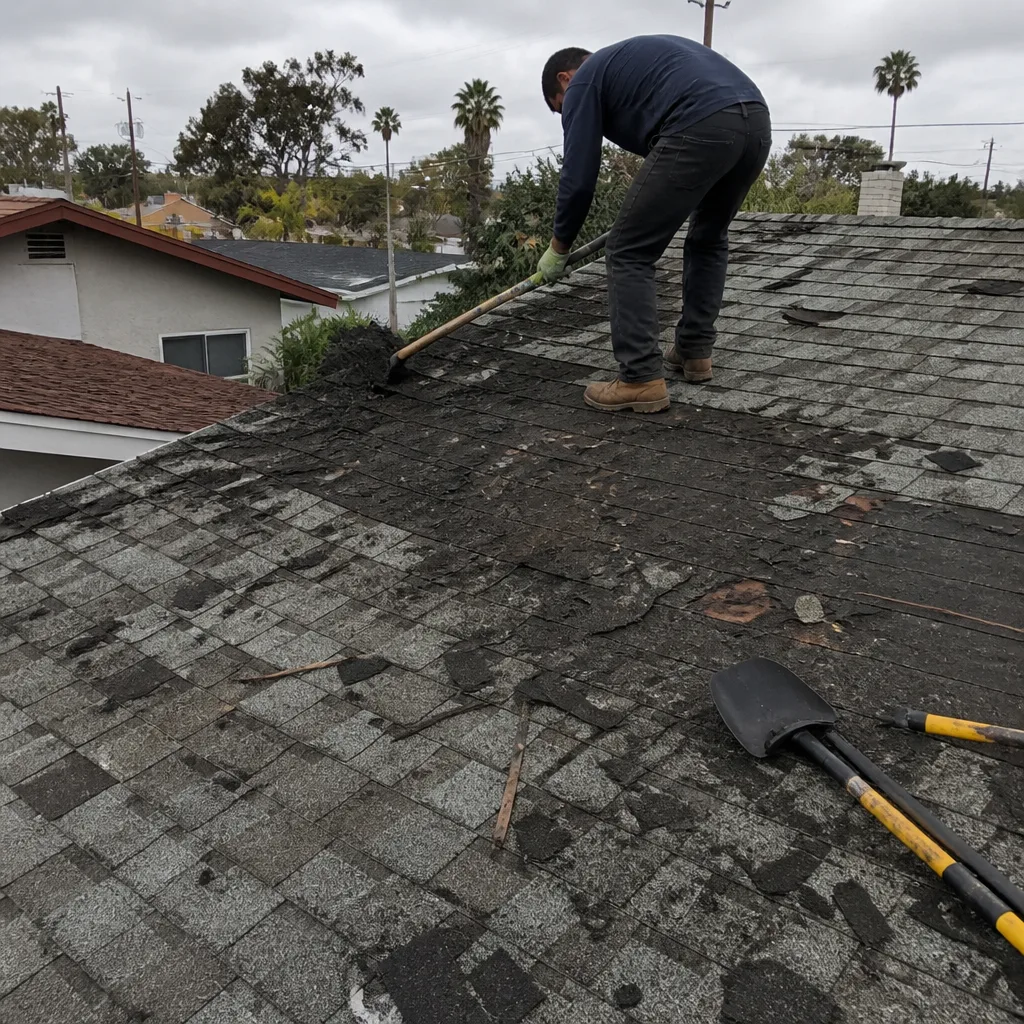 Before
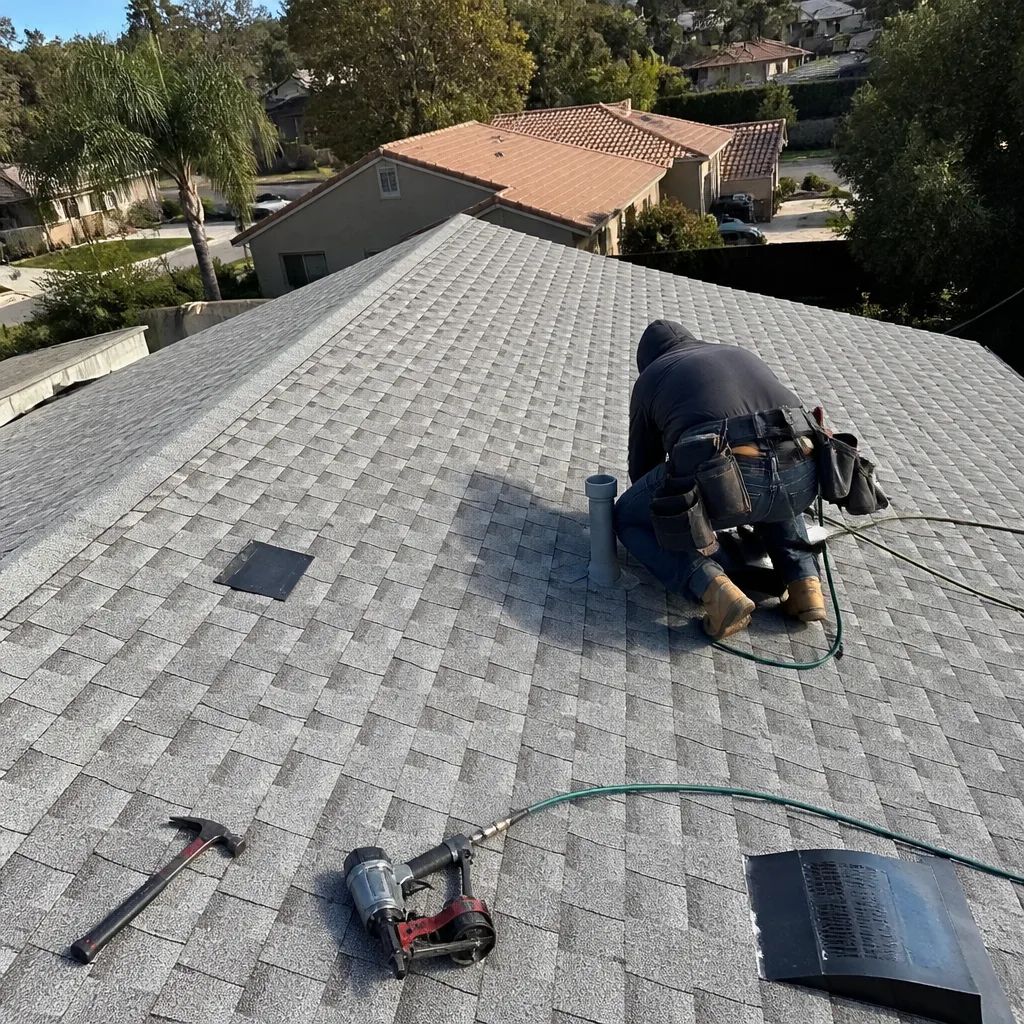 After
After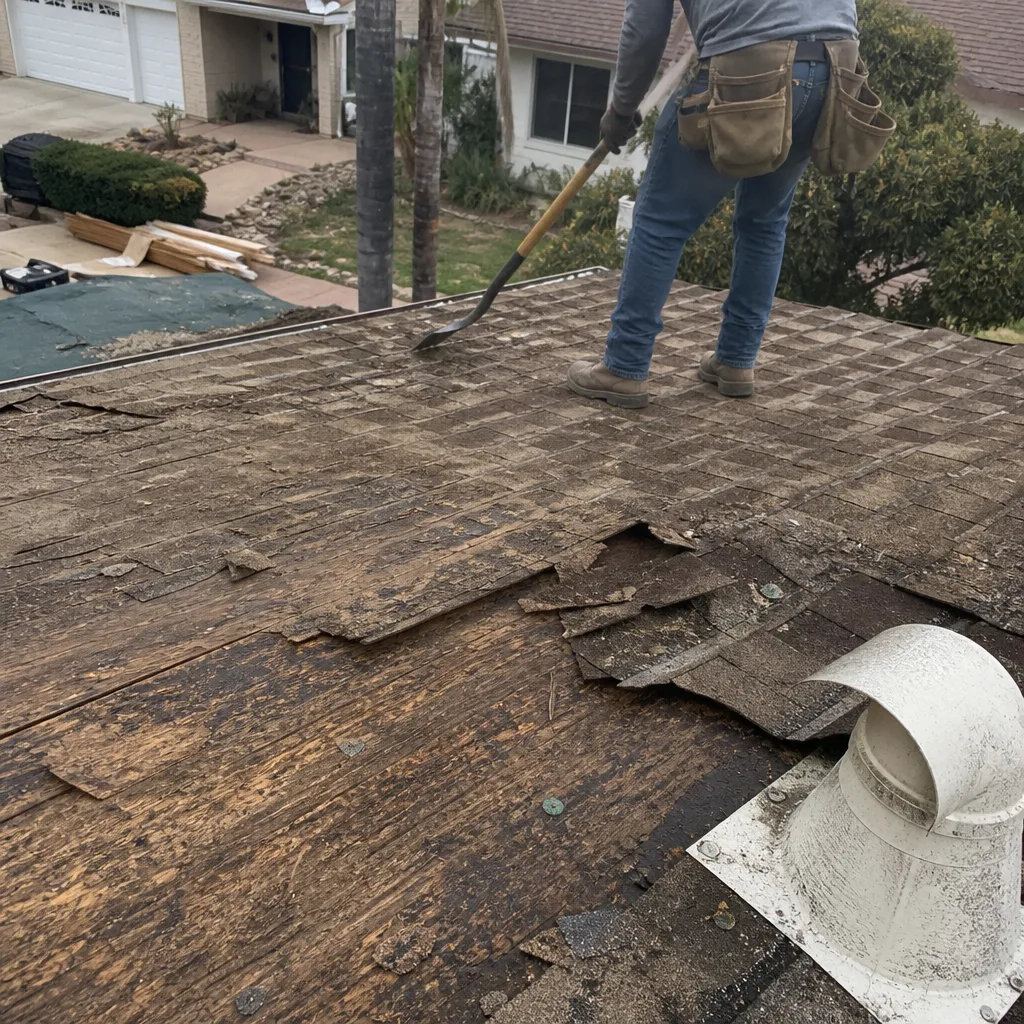 Before
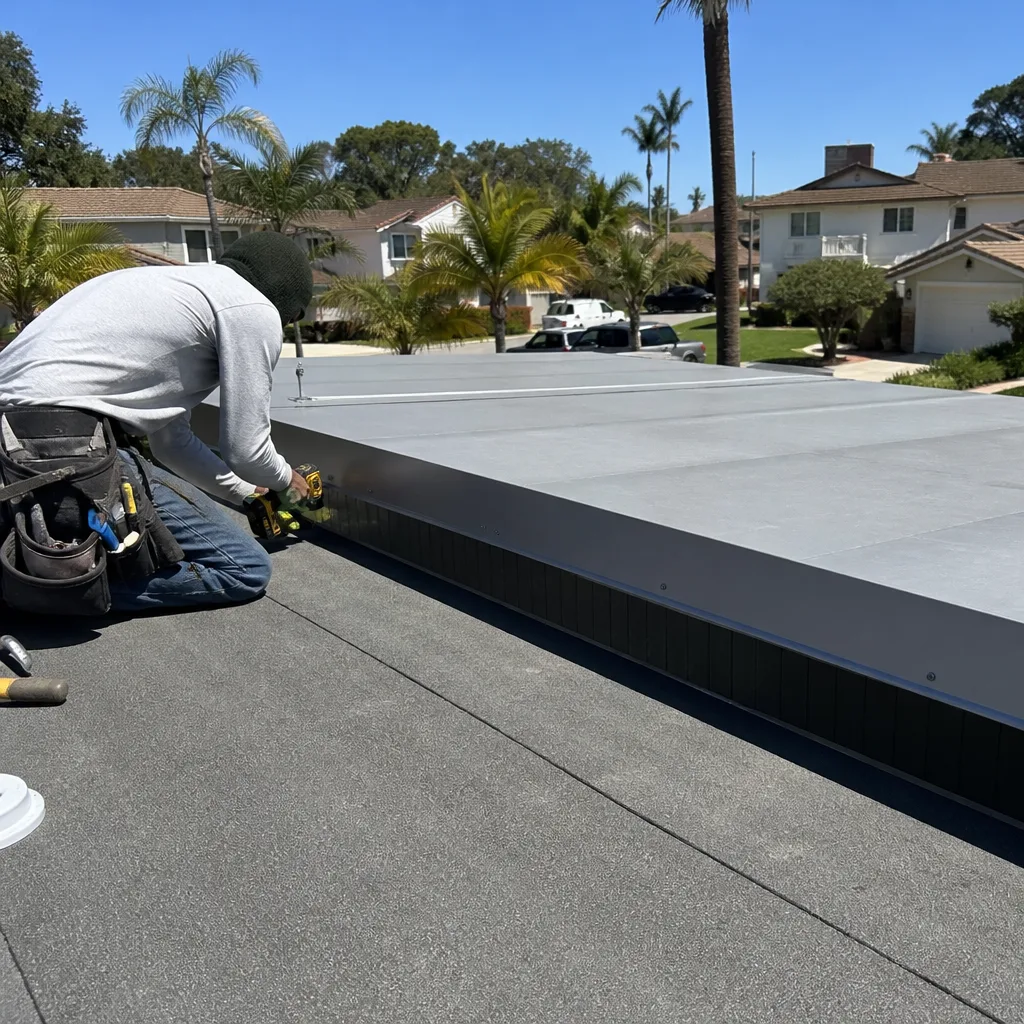 After
After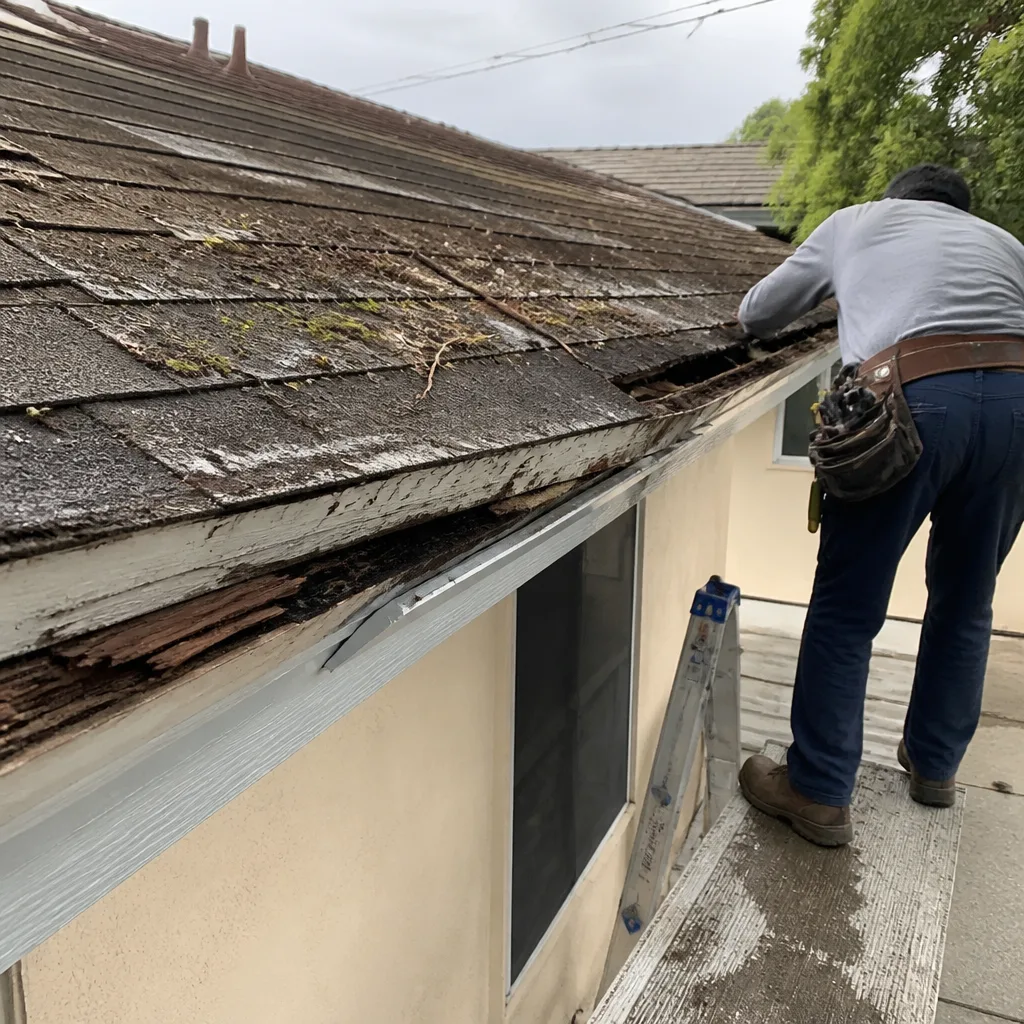 Before
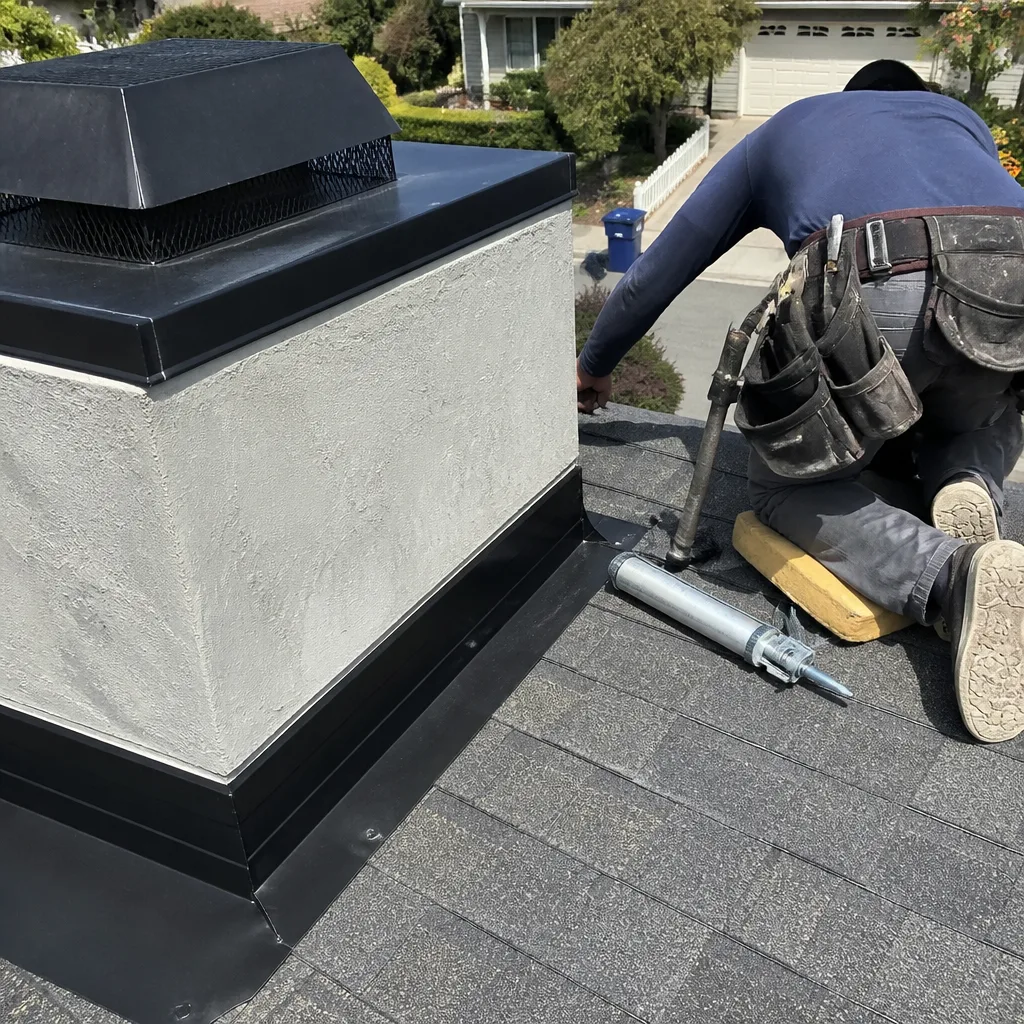 After
AfterReplacement Cost & What’s Included
Here’s what Atlas flashing replacement costs in San Diego, installed:
| Flashing Type | Installed Price Range | Typical Job Time |
|---|---|---|
| Step flashing at a wall (up to 10 linear feet) | $225 – $375 | 2 – 4 hours |
| Chimney flashing (saddle, counter, step) | $375 – $575 | 4 – 6 hours |
| Valley flashing replacement | $300 – $500 | 3 – 5 hours |
| Vent pipe boot replacement (Atlas-compatible) | $150 – $250 | 1 – 2 hours |
The range moves based on roof pitch, how many courses of shingles we have to lift, and whether the existing flashing was installed with the wrong rise and needs correction. Every job comes with a written price before any work starts, no surprises on the invoice. The replacement includes new flashing metal, sealant, any lifted shingles re-set and re-nailed, and our 365-Day Done Right Promise: if the flashing fails within a year, we come back and make it right at no charge.
DIY or Call Us?
Flashing replacement is not a high-danger job the way spring work or steep-pitch tear-offs are, but it’s also not a caulk-and-hope fix. What you can safely do yourself: check the attic for daylight at roof intersections, look for lifted metal from a ladder, and clear debris that’s trapping water against flashing. What goes wrong with DIY: homeowners caulk over corroded flashing instead of replacing it, which hides the problem for a season and then fails catastrophically; they buy 4-inch step flashing for a 5-inch Atlas exposure; or they lift shingles and can’t re-seat them, leaving a bigger water path than they started with.
If you’re seeing water stains or daylight, the flashing is already failing, and patching buys you weeks, not years. Call us at (619) 810-5520 and we’ll get a technician out to look, measure, and give you a written price. You’ll know the technician’s name and see their photo before they arrive, and they’ll badge in with photo ID at the door.
FAQs
Step and counter flashing on Atlas roofs in San Diego typically lasts 15 to 25 years, but coastal homes within a mile of the ocean often see corrosion at 10 to 12 years due to salt air. Call (619) 810-5520 and we’ll inspect yours and tell you what condition it’s actually in.
Small separations can sometimes be re-secured and resealed, but corroded or undersized flashing should be replaced, not patched. For an honest take on whether a repair will hold or a replacement is the smarter spend, call (619) 810-5520 for a free estimate.
Most Atlas flashing replacements in San Diego are done in a half day, though chimney work on steep pitches can stretch to a full day. We’ll give you a written timeline with the estimate before we start.
We stock Atlas-compatible step flashing in 4-inch and 5-inch rises, vent pipe boots, and valley metal on our trucks across San Diego. For chimney saddles and custom counter flashing, we fabricate to your roof’s measurements, typically same day or next morning.
Written by Grant Whitlock, Owner, Mercer Roofing Co San Diego at Mercer Roofing Co San Diego, serving San Diego and nearby areas.